
Infection in joint is known as septic arthritis is a ‘surgical emergency’ especially for in a child. The joint of a child is anatomically different from an adult. The joint of a child have cartilage which are yet to get ossified into bone, in contrast to adult which are bony and strong. Due to this soft cartilage portion of the joint it gets affected by the infection more than an adult. The pus formed during an bacterial infection contained chondro-lytic enzymes which degrades the cartilage portion of the joint and cause permanent irreparable damage of the joint. The ‘septic arthritis of the hip’ is the most common joint involved in a child unlike adult where septic arthritis of the knee is common. Hip septic arthritis in child should be taken seriously as it also may cause septic shock.
Diagnosis:
The child complaints of pain in the affected joint and will have restricted movement a term known as ‘pseudo (false) paralysis’. They will also have high grade fever. The blood test will show signs of infection. A X-ray and USG of the joint is done to see the presence of excess fluid in the joint. If there is a controversy with the diagnosis MRI is often done.
Treatment:
The treatment of acute septic arthritis is surgery named arthrotomy. In arthrotomy the joint is opened and cleaned of all the infection and thoroughly washed. Post operatively culture specific antibiotics are given intravenously and orally for at least three weeks.
Post septic sequela of hip
It is one of the long term complication where the hip joint loses its shape, becomes incongruent and the joint dislocates . The leg may appear shorter in comparison to the opposite side. It is extremely difficult condition to treat.
Caution-It is better to operate and get a negative result on surgery than to miss a septic arthritis of hip due to its dreaded complications and sequela.

Infection of the paediatric bone (Osteomyelitis)
Infection of the bone is known as osteomyelitis. The bone of a child are more susceptible to infection than adult. Infection can lead to ‘growth plate’ arrest which can cause secondary deformation. Osteomyelitis can be acute if the duration of the symptoms are less than 3 weeks, subacute– if the duration of symptoms are more than 3 weeks but less than 3 months and chronic, where the duration of the symptoms are more than 3 months.
Signs and Symptoms- The child will complaints of pain in the bone involved with discharging sinus. Fever is a symptom of acute osteomyelitis and may be absent in chronic osteomyelitis. Many a time abscess is formed below the skin without formation of a sinus. Area involved will have swelling, local warmth and tenderness, redness and there will be loss of function of the limb.
Investigations- Clinical suspicion will demand a X-ray to see the status of the bone. MRI is reserved for cases with doubtful diagnosis or preoperative planning. USG is an quick and effective alternative to detect abscess. Blood test are done to see for the signs of infections
Treatment-
Acute osteomyelitis requires an extended course of antibiotics. The role of antibiotic in treatment of osteomyelitis is controversial.
Surgery is planned when there is abscess anywhere (inside or outside the bone) and removal of sequestrum, which is a dead piece of bone inside a living bone and the main source of infection in the osteomylitic bone.
Caution- Overdiagnosis and doing surgery prevents late complications.
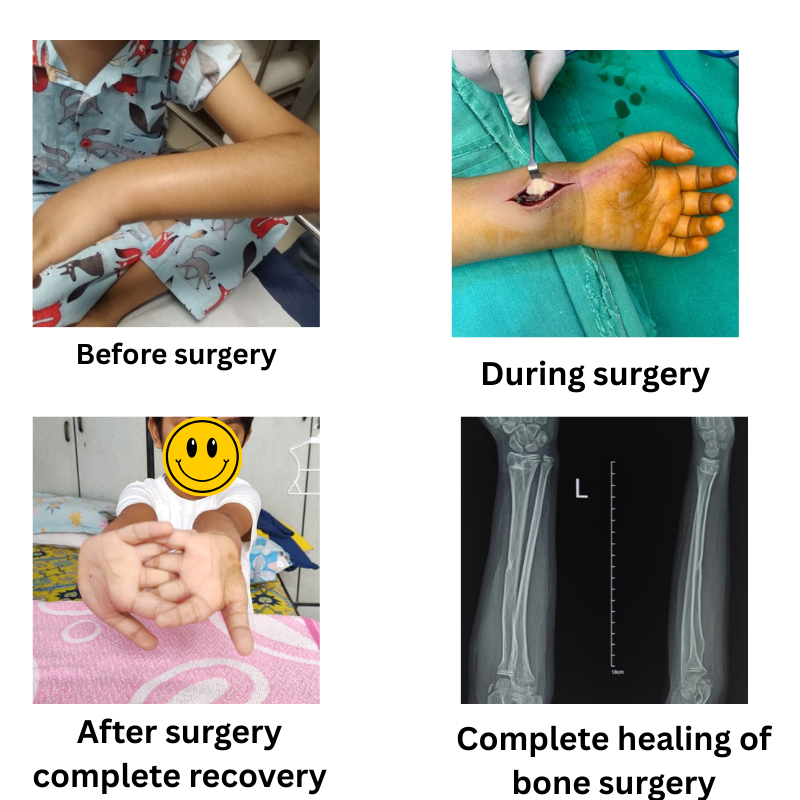
7 year old boy with Left radius Acute Osteomyelitis, urgent surgical debridement was done, child showing complete recovery after surgery.

Chronic Osteomyelitis of the tibia in a 5 year old boy, completely cured of infection and walking after surgical debridement and sequestrectomy.